 Fossil Forecast
About Fossil Forecast
One person, one simple idea: the best fossil hunting is predictable — so why is everyone still juggling three websites and a tide table?
Who makes this
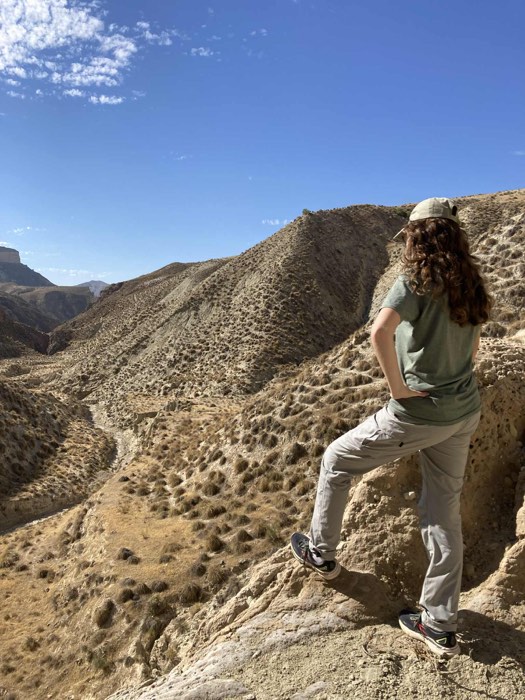
Fossil Forecast is made by Emily — not a company, not an app studio. It's independent, ad-free, and paid for by club members and supporters.
I've been fascinated by fossils since I was a child, but it wasn't until recent years that curiosity turned into a full-blown passion. Like a lot of people, I didn't know where to start — I spent hours poring over geology maps, trying to make sense of stratigraphy and figure out which coastlines might actually hold something worth finding.
Then, on a holiday, I found my first ammonites — and that was it. I was hooked. Since then, fossil hunting has taken me from Norfolk's crumbling cliffs to the valleys of Wales. Some finds stand out: on the Norfolk coast, a fragment of tusk — likely mammoth or ancient elephant — worn smooth by thousands of years of tide and time. More recently in Wales, stigmaria: the fossilised roots of the tree-like plants that formed vast Carboniferous forests. Every find is a small window into a world millions of years gone.
One of my goals with this site is to make fossil hunting feel more accessible — especially to women and girls who might not see themselves reflected in this hobby yet. You don't need a geology degree or expensive equipment to get started. You just need curiosity, a bit of patience, and the right timing. The timing is the part I can help with.
Why it exists
The best fossil hunting follows a pattern every experienced collector knows: a big low tide, falling during daylight, one to three days after an onshore storm has washed fresh material out of the cliffs. Checking for that pattern by hand means a tide table, a weather app, a wave forecast and a sunrise chart — every single day, for every beach you care about. Fossil Forecast does that cross-referencing automatically, every morning at 6am, and turns it into one plain answer: go or don't go, and if you go, when to leave the beach.
Where the data comes from
- Tides: WorldTides, which aggregates official hydrographic predictions.
- Weather and waves: Open-Meteo, blending the same forecast models your weather app uses.
- Daylight: calculated astronomically for each beach.
- Beach knowledge: written by hand from established guidance — heritage centre collecting codes, museum services, and the UK Fossils location guides we link on every beach page.
Forecasts are guidance, not guarantees. Always check official tide times locally, and read the safety page before you go.
Our aim
Make fossil hunting feel doable — and safe — for anyone with curiosity and a free morning. Concretely, that means three promises to you:
- You'll know when to go. The one thing experienced collectors have — a feel for storms, tides and timing — delivered to everyone, every morning.
- You'll know when to leave. Every forecast carries a hard leave-by time, because nobody's fossil is worth a lifeboat call-out.
- The coast stays protected. We never soften safety lines to make a day look better, never publish locations precisely enough to get a site stripped, and always point significant finds to museums.
Something wrong, or something we should add? Tell us or email emily@fossilforecast.com — we read everything.